
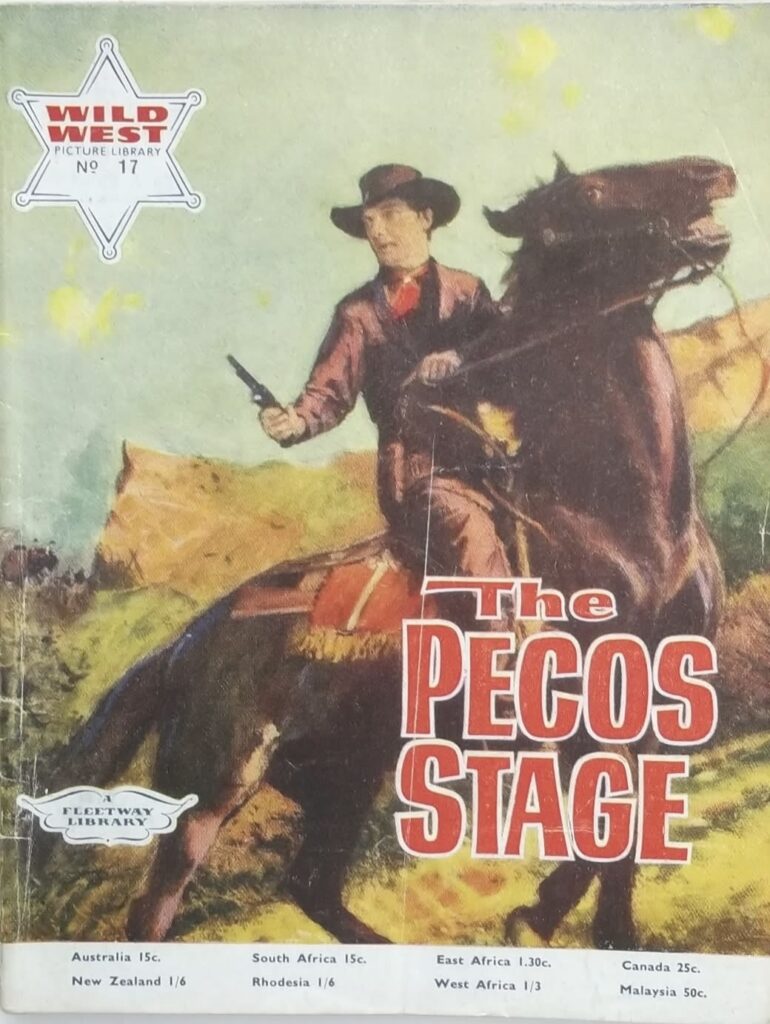
Wild West Picture Library was a later entrant in the highly popular “picture libraries” in the 50s and 60s where Westerns were still as popular as war and adventure stories like War Picture Library and Thriller Picture Library.
By the mid 60s,Fleetway, which had huge reserves of older Western material from their “Cowboy Picture Library” and their short lived [12 issues] “Lone Rider” series, repackaged these and launched them under the banner of Wild West Picture Library in 1966.
To fully appreciate where this series came from, it helps to look at its predecessor “Cowboy Picture Library” which originated in 1950 as part of Amalgamated Press and later absorbed into Fleetway.
This highly popular series ran for over 400 issues and established the format of pocket comics. Each issue contained a single 64-page story particularly as the series was ending but earlier ones featured two or three shorter ones.
Stories ranged from frontier clashes and outlaw manhunts to U.S. cavalry adventures. Recurring characters would appear almost monthly like Kit Carson, Buck Jones and the Kansas Kid. Much of the artwork was produced outside the U.K. particularly in Italy, Spain and Argentina and although the names of artists were never credited in the works, the style of different contributors soon became a familiar sight to the avid readers of the series.
With Cowboy Picture Library ending in 1960, Fleetway decided to reshuffle its extensive comic archives-stories originally published under one title and could easily be repurposed under another i.e. issue no.2 of Lone Rider Picture Library” MANHUNT, became Issue no.17 of Wild West Picture Library titled THE PECOS STAGE all with new covers, themselves recycled, and alterations made to character’s names.
Despite being a re-print title, Wild West Picture Library still holds historical interest as the repackaging preserved these comic archives rather than allowing old material to disappear and became accessible to new readers and artistically this series is seen as a showcase for the international talent that defined British comics of the era.
Though short lived compared to Cowboy Picture Library, {1966-1971} the series preserved a body of work that reflects the high artistic standard of mid-century Western comics and its value today lies in its availability to the nostalgic side of grateful Baby Boomers and others and as an accessible archive of material that might otherwise have slipped into obscurity.